
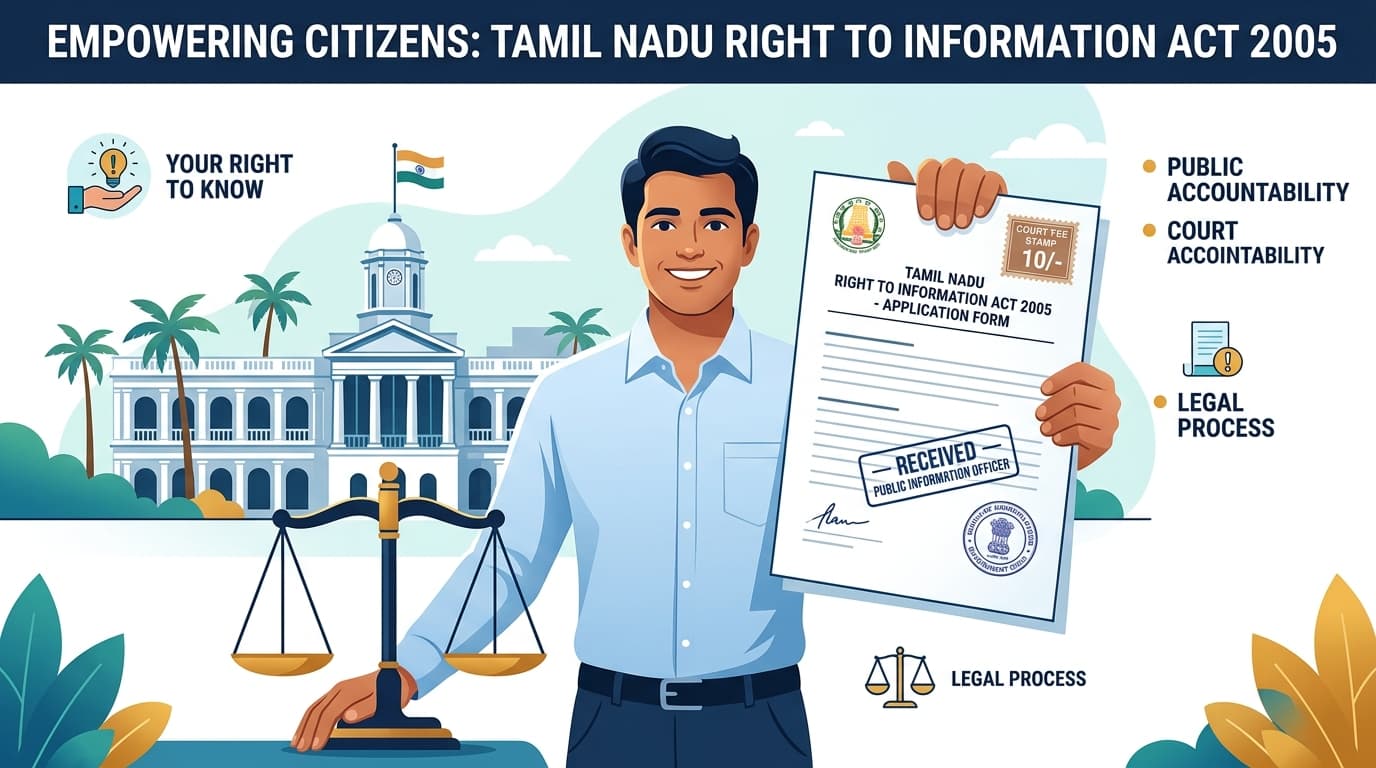
The Right to Information (RTI) Act 2005 is one of the most powerful legal instruments available to Indian citizens to demand transparency, inspect government files, and question administrative inaction.
What Information Can You Request Under RTI?
- Details of road relaying tender amounts, contractor names, and quality audit reports.
- Status and reasons for delay in issuing certificates, pensions, or utility connections.
- Certified copies of government orders, municipal resolutions, and budget allocations.
- Attendance registers and duty charts of public officials in local offices.
How to Draft a Powerful RTI Application:
- Address the Correct Authority: Address the application to the "Public Information Officer (PIO)" of the specific department (e.g., Greater Chennai Corporation / Highways Department / TANGEDCO).
- Ask Precise Questions: Frame clear, specific questions starting with "What", "When", "How much", or "Provide certified copy of...". Avoid asking for opinions or hypothetical situations.
- Application Fee: Attach a ₹10 Court Fee Stamp or Postal Order / Demand Draft payable to the PIO. Below-Poverty-Line (BPL) card holders are exempt from fees.
- Online Option: Submit applications online directly at rtionline.tn.gov.in.
Statutory Timelines & First Appeal:
- 30-Day Mandatory Window: The PIO MUST provide written information within 30 calendar days (48 hours if life or personal liberty is concerned).
- First Appeal Process: If information is denied, incomplete, misleading, or delayed beyond 30 days, file a First Appeal to the "First Appellate Authority (FAA)" (Head of Office) within 30 days. No fee is required for the first appeal.