Prime Minister Modi Inaugurates Redeveloped Chennai Park Railway Station: Modern Facilities Transform Commuter Experience
Station modernization project delivers improved accessibility, enhanced passenger amenities, and seamless multimodal connectivity under national Amrit Bharat Station Scheme.
Why this matters to Tamil Nadu
Railway stations serve as transportation gateways affecting daily commuting experiences for thousands of passengers. Modern station facilities with good accessibility, comfortable waiting areas, and clear signage reduce passenger stress and make rail travel more attractive compared to individual vehicle use. The improved multimodal connections enable residents to complete complex urban journeys using public transportation rather than requiring private vehicles. For elderly residents and persons with disabilities, the enhanced accessibility features represent transformative improvements enabling independent transportation access that was previously difficult or impossible.
Strategic Importance of Chennai Park Station
Chennai Park Railway Station occupies a strategically significant location within the city's transportation network, serving as a key suburban interchange connecting multiple transportation modes. The station directly interfaces with the Mass Rapid Transit System (MRTS), Chennai Metro, and extensive city bus networks, making it a critical node in the metropolitan mobility ecosystem. The station serves thousands of commuters daily traveling between suburban areas and commercial districts, and also accommodates significant tourist traffic visiting Central Chennai attractions.
The facility originally opened on May 11, 1931, as part of India's first electrified suburban rail corridor. Despite its historic importance, the station's infrastructure had not received comprehensive modernization in decades, limiting passenger convenience and operational efficiency. The redevelopment project addressed this infrastructure gap while preserving the station's historical significance and integration within the larger urban transportation system.
Redevelopment Scope and Cost
The Chennai Park station redevelopment was executed at a project cost of ₹14.79 crore, representing a substantial investment in infrastructure modernization. The project scope extended beyond basic facility renovation to encompass comprehensive infrastructure transformation targeting both immediate passenger comfort and long-term operational efficiency.
The redevelopment process involved coordination between Indian Railways, Southern Railway zone authorities, local municipal administration, and project contractors to ensure that improvements aligned with broader urban development objectives and transportation policy priorities. The project was phased to maintain operational continuity, ensuring that passenger services were not disrupted during construction activities.
Modern Station Infrastructure and Design
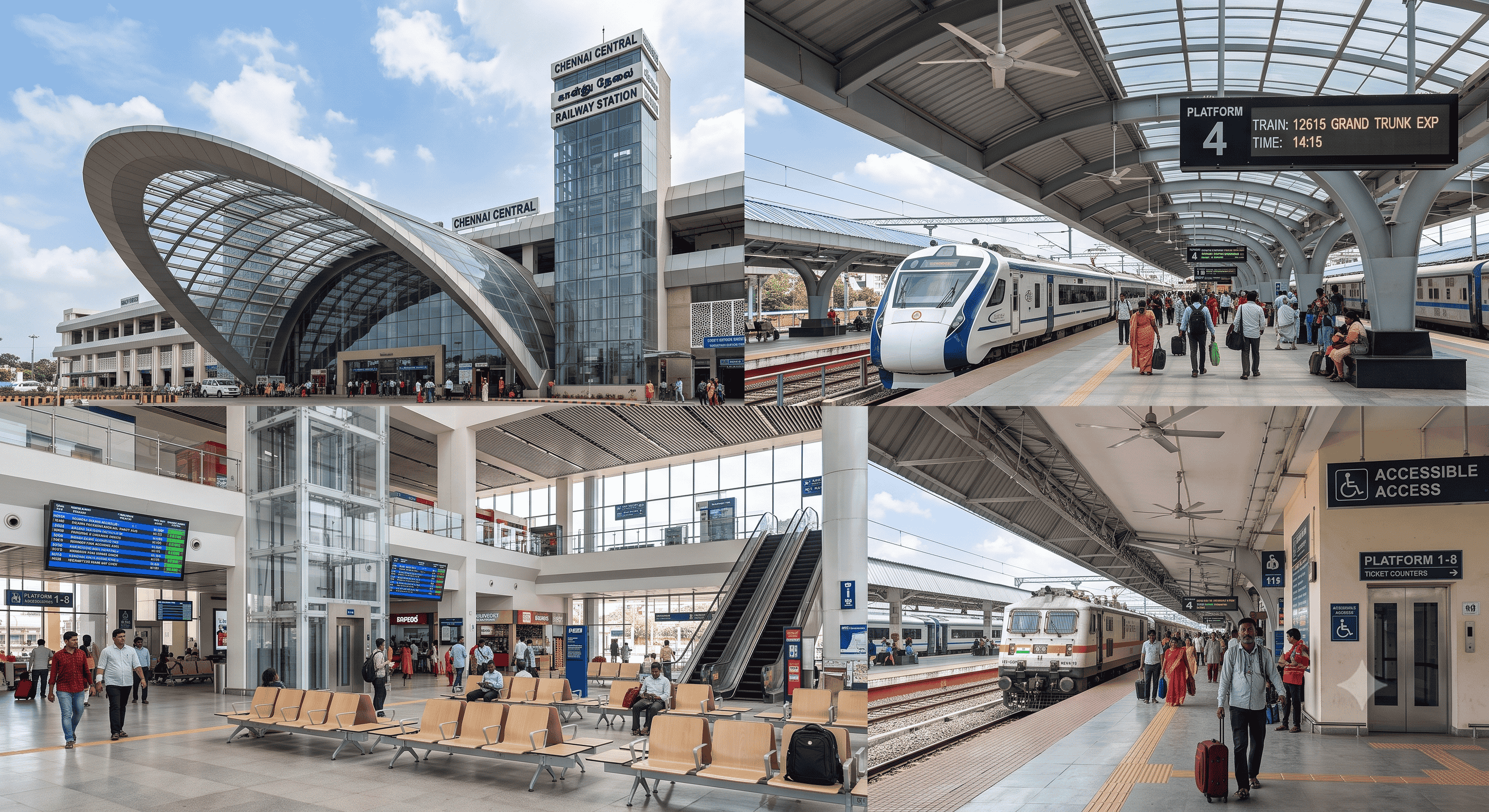
The redeveloped station features a contemporary architectural design emphasizing passenger circulation and operational efficiency. The entry point now includes an impressive canopy structure providing weather protection and visual distinctiveness. A landmark tower element adds architectural identity to the station, making it visually recognizable within the urban landscape and facilitating wayfinding for first-time visitors.
The booking office has been completely modernized with improved layouts that reduce congestion and accelerate passenger ticketing processes. Multiple ticket counter positions enable parallel processing of passenger requests, reducing wait times during peak hours. The redesigned waiting areas provide comfortable seating arrangements, improved ventilation, and enhanced passenger amenities compared to the original cramped facilities.
Accessibility and Mobility Infrastructure
A central design emphasis of the redevelopment was ensuring comprehensive accessibility for elderly passengers and persons with disabilities. Two lifts have been installed to facilitate easy access to the foot overbridge, eliminating the need for stair climbing and enabling wheelchair access. The lifts connect ground-level platforms with the foot overbridge, resolving a significant accessibility barrier that previously existed at the station.
Barrier-free infrastructure has been incorporated throughout the station complex, including ramps, handrails, and accessible pathways. Platform shelters provide weather protection while using accessible design that accommodates wheelchair users. The extension of the foot overbridge includes a connection to the Madras Medical College area, creating improved pedestrian linkage between the railway station and the neighboring major medical facility.
Passenger Amenities and Safety Systems
The modernization includes approximately 30 closed-circuit television (CCTV) cameras throughout the station complex, significantly enhancing security monitoring capabilities and enabling rapid response to security incidents or safety concerns. The camera system enables station management to observe crowding conditions, identify potential safety hazards, and coordinate with security personnel for incident response.
Platform facilities have been significantly enhanced with approximately 70 ventilation fans improving air circulation during peak usage periods. The previous station suffered from inadequate ventilation leading to heat accumulation and passenger discomfort, particularly during summer months. The expanded fan system addresses this environmental control issue, creating more comfortable conditions for waiting passengers.
Platform surfaces have been resurfaced with improved safety surfaces, and additional shelters with modern roofing systems provide comprehensive weather protection. These improvements address passenger comfort and address longstanding issues of water leakage during monsoon periods that had affected the original station facilities.
Seamless Multimodal Connectivity
A critical objective of the station redevelopment was ensuring seamless connectivity between railway transportation and other urban mobility modes. Dedicated pedestrian pathways have been created to facilitate easy movement between the railway station and the adjacent Mass Rapid Transit System (MRTS) station. These improved pathways eliminate confusion and reduce walking time for passengers transferring between systems.
The station's proximity to Chennai Metro connections and extensive city bus network access positions it as a critical interchange hub. The modernized facilities and improved signage facilitate passenger orientation and reduce transfer times for commuters using multiple transportation modes. The project recognizes that modern urban mobility increasingly requires seamless integration across transportation systems rather than operation of isolated modes.
National Amrit Bharat Station Scheme Context
The Chennai Park station redevelopment represents one component of the ambitious national Amrit Bharat Station Scheme, under which 1,334 railway stations across India are being modernized at a total project cost of approximately ₹1 lakh crore (₹1 trillion). The scheme aims to transform railway stations from basic transportation facilities into modern, passenger-friendly urban mobility hubs that blend contemporary amenities with consideration for local architectural heritage.
As of the date of the inaugural event, 119 stations had been completed and inaugurated nationwide, while 75 stations including Chennai Park were being inaugurated simultaneously. In the Southern Railway zone specifically, 21 stations had previously been completed, with additional stations progressing through various construction phases. The remaining approximately 1,150 stations are progressing at various stages toward modernization.
Economic and Social Impact
Modern, well-maintained railway stations contribute to the overall urban environment and reflect a city's development status. Improved facilities encourage public transportation utilization by making rail travel more comfortable and convenient compared to alternatives. When railway facilities are modern and passenger-friendly, more commuters choose rail transportation, reducing individual vehicle usage and contributing to lower urban congestion and pollution levels.
The modernization also supports local tourism by providing a positive initial impression to visitors arriving by train. The improved station facilities, accessible infrastructure, and clear wayfinding capabilities facilitate visitor movement into the city and reduce orientation challenges faced by first-time rail travelers.
Future Expansion and Integration Plans
The redeveloped station establishes a foundation for potential future expansion as urban population growth and transportation demand continue to increase. The modern infrastructure and improved layout enable more efficient operations if future capacity expansion becomes necessary. The seamless connections with MRTS, Metro, and bus networks position the station to serve as a critical component of Chennai's broader metropolitan transportation strategy as the city continues to develop.
✅Key Highlights
🕐Timeline
📎Official Sources
Join the Conversation
View DiscussionShare your views, ask questions, and stay updated with your community.
Share this story
Stay updated with TN Today
Get the day's top story delivered to your inbox every morning.