Tamil Nadu Launches Major Green Initiative: Bio-CNG Plants Set to Transform Waste Management
Chief Minister C. Joseph Vijay directs statewide expansion of bio-CNG facilities to convert municipal waste into clean energy while addressing solid waste challenges.
Why this matters to Tamil Nadu
The bio-CNG plant expansion directly addresses two critical challenges facing Tamil Nadu: municipal solid waste management and energy sustainability. For residents, this means less landfill dependency, reduced environmental pollution, and improved air quality in urban areas. The initiative demonstrates government commitment to finding practical solutions to longstanding civic problems while creating economic value from waste streams. As cities continue growing and waste generation increases, the ability to convert municipal refuse into clean energy becomes increasingly important for both environmental health and long-term urban sustainability.
New Government Prioritizes Sustainable Waste Solutions
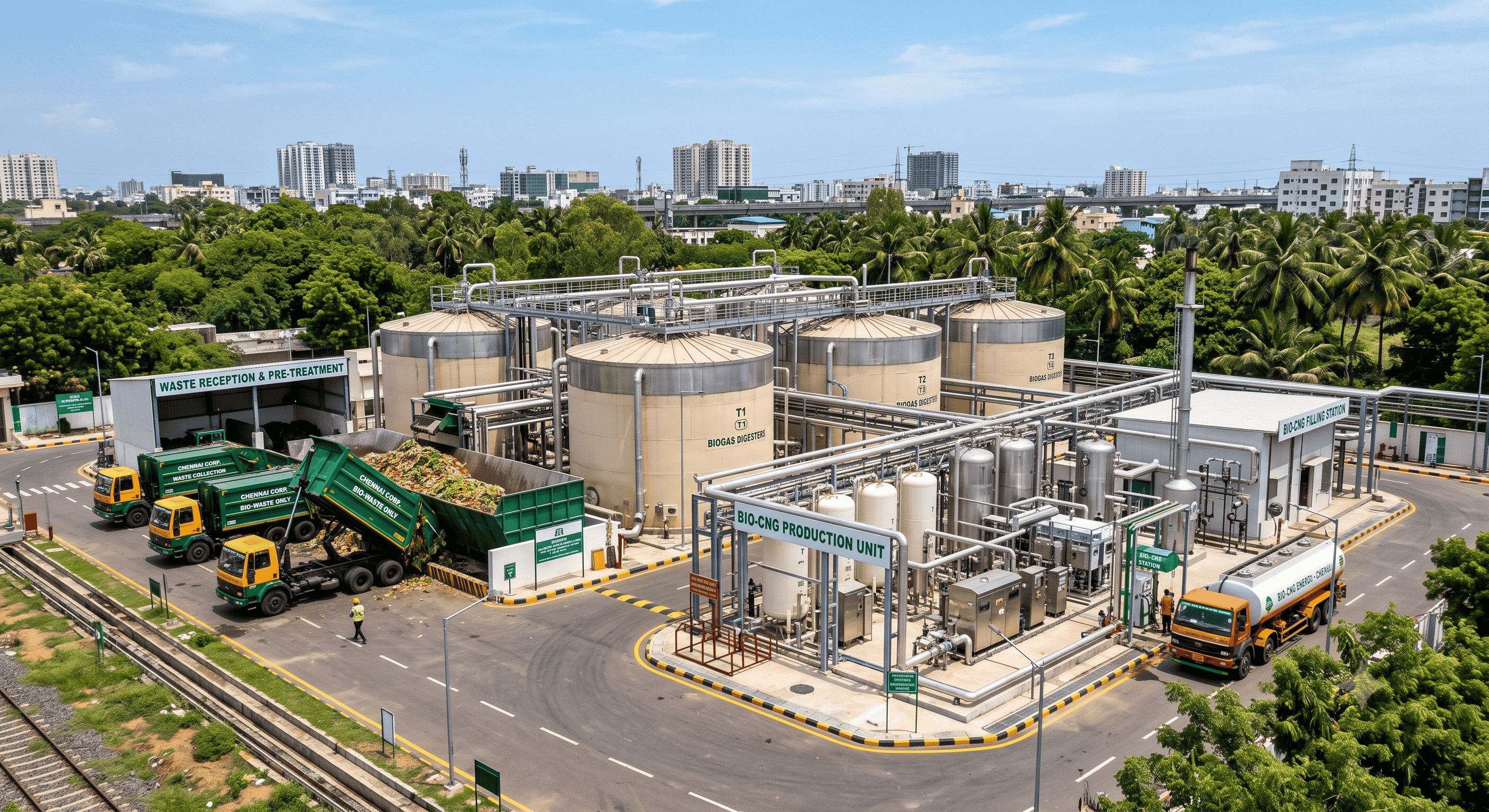
Tamil Nadu's newly formed government under Chief Minister C. Joseph Vijay is making environmental sustainability a central pillar of its governance strategy. During an unannounced inspection of the 100-tonne-per-day biogas facility at Chetpet in Chennai on July 21st, the Chief Minister reviewed operations and engaged directly with facility managers to understand the waste-to-energy conversion process. This hands-on approach signals a strong commitment to green initiatives at the highest levels of state administration.
The visit represents the Chief Minister's first inspection of a Chennai civic facility since assuming office, underscoring the priority placed on waste management infrastructure. The Chetpet plant, operational since 2022 and managed by Srinivas Waste Management Solutions, has successfully demonstrated how municipal waste can be converted into valuable resources rather than being directed to landfills.
How the Bio-CNG Technology Works
The biogas plants employ anaerobic digestion technology, where microorganisms break down biodegradable waste in oxygen-free environments. This biochemical process generates methane-rich biogas, which is purified and compressed into bio-CNG. The processed gas can be supplied directly to compressed natural gas distribution networks and supplied to commercial users including restaurants, hotels, and industrial establishments requiring heating or cooking fuel.
Beyond fuel production, these facilities generate organic manure as a byproduct, creating additional economic value. The municipal solid waste stream typically contains 60 percent biodegradable materials, making it an ideal feedstock for bio-CNG production. Currently, Chennai alone generates approximately 5,000 tonnes of waste daily, while the entire state produces around 100,000 tonnes, presenting both an environmental challenge and an opportunity for resource recovery.
State-Level Expansion Strategy
Following the inspection, Chief Minister Vijay issued directives to expand bio-CNG waste processing capacity across Tamil Nadu's urban local bodies. The expansion plan targets multiple districts and municipal corporations, bringing the waste-to-energy model from select facilities to broader geographic coverage. This systematic approach aims to prevent waste from accumulating in landfills while generating renewable energy and agricultural inputs simultaneously.
Officials have been instructed to ensure complete segregation of waste streams at the source, improving efficiency in processing and output quality. Wet waste segregation is particularly critical for anaerobic digestion, as contamination from non-biodegradable materials can compromise facility operations and reduce biogas yields. The Chief Minister emphasized that proper waste management infrastructure protects both environmental health and public well-being.
Environmental and Economic Benefits
Bio-CNG production addresses multiple policy objectives simultaneously. The technology reduces methane emissions from landfills, which significantly contribute to climate change. By processing waste at controlled facilities with captured biogas, the state prevents uncontrolled methane release while harvesting the energy potential of organic materials. The clean-burning bio-CNG fuel also reduces air pollution compared to conventional fuels, improving urban air quality.
Economically, the model creates multiple revenue streams. Bio-CNG can substitute conventional natural gas supplies, reducing state energy import requirements. Organic manure production supports agricultural sectors across Tamil Nadu. The facility operations also generate employment opportunities in waste management and technical roles, contributing to the state's economic development while addressing environmental challenges.
Integration with Government Priorities
The bio-CNG initiative aligns with the new administration's broader focus on infrastructure development and environmental responsibility. Earlier this month, Prime Minister Narendra Modi inaugurated and laid foundation stones for development projects worth ₹5,650 crore across Tamil Nadu. These projects span transportation, urban services, and civic infrastructure, complementing the government's environmental commitment through the bio-CNG expansion.
The Chetpet facility serves as the model template for expansion. Its successful operation demonstrates technical feasibility within the Tamil Nadu context. Similar facilities at other urban centers can be adapted based on local waste generation patterns and available land resources. The government expects to develop a coordinated network of bio-CNG plants that collectively manage a significant portion of the state's daily waste generation.
Looking Forward
The bio-CNG expansion represents a shift toward circular economy principles in Tamil Nadu's waste management approach. Rather than viewing waste as a disposal problem, the government is positioning it as a resource requiring processing and conversion. This paradigm aligns with national sustainability goals and international climate commitments while generating local economic benefits.
Chief Minister Vijay's hands-on approach to reviewing the facility demonstrates government willingness to engage with operational realities rather than rely solely on policy frameworks. This engagement style may characterize the new administration's approach to various development sectors. For residents and environmental advocates, the expanded bio-CNG network offers tangible progress toward cleaner cities and more sustainable resource management practices.
Additional News Highlights for TN Today – July 23, 2026
Top Headlines
- Chief Minister Vijay launches statewide bio-CNG plants to convert municipal waste into clean energy
- Greater Chennai Corporation mandates property tax payment extension until July 31 for 7.25 lakh property owners
- DVAC conducts raids across 35 taluk offices, seizes ₹13.78 lakh in unaccounted cash
- Tamil Nadu Police dismantles counterfeit currency ring operating in Chennai
- Mumbai Weather: Light to moderate rain and thunderstorms forecast through July 27; fishermen warned
- Chennai Metropolitan Water Board notices 520 residents for illegal water pump installation
- NEW: Census 2027 self-enumeration begins; 17,000 Chennai families complete first day registration
- Madras High Court halts forest department from engaging NGOs for elephant care oversight
- Prime Minister Modi inaugurates redeveloped Chennai Park railway station with modern facilities
- Greater Chennai Corporation orders review of 90 project cost estimates for 2026-27 budget
Additional Stories Ready for Publication
GOVERNANCE & ADMINISTRATION
Anti-Corruption Drive Intensifies: DVAC Raids Recover ₹13.78 Lakh
The Directorate of Vigilance and Anti-Corruption (DVAC) has accelerated its investigations across Tamil Nadu, conducting simultaneous raids on 35 taluk offices on July 18th. Officials seized approximately ₹13.78 lakh in unaccounted cash, signaling intensified scrutiny of administrative practices under the new government. The Greater Chennai Corporation also suspended seven officials following DVAC raids on civic facilities, citing allegations of irregular tender practices and bribery. These coordinated enforcement actions represent the new administration's stated commitment to transparent governance and institutional accountability.
Why it matters: Citizens are directly impacted by administrative corruption through inflated project costs, poor service delivery, and resource misallocation. Enhanced DVAC oversight provides accountability mechanisms and may improve the efficiency and fairness of government services that residents depend on daily.
INFRASTRUCTURE & DEVELOPMENT
Railway Station Modernization: Chennai Park Station Inaugurated with Enhanced Passenger Amenities
Prime Minister Narendra Modi formally inaugurated the redeveloped Chennai Park railway station on July 18th, completing a major upgrade of the historic transportation hub. The project modernizes passenger facilities, improves station infrastructure, and enhances connectivity as part of a national initiative to upgrade 75 railway stations across India. The station's redevelopment cost ₹5,650 crore worth of development initiatives across Tamil Nadu, reflecting substantial central government investment in the state's transportation network.
Why it matters: Railway stations serve as primary transportation nodes for commuters, traders, and travelers. Modern facilities improve passenger experience, reduce waiting times, and enhance safety. The project demonstrates coordinated efforts between state and central governments to strengthen urban mobility infrastructure, benefiting residents who depend on rail services for daily commutes and commerce.
WATER SUPPLY & INFRASTRUCTURE
Chennai Metropolitan Water Board Tightens Regulations: 520 Notices Issued for Illegal Water Pumps
The Chennai Metropolitan Water Supply and Sewerage Board (Metro Water) issued regulatory notices to 520 residents on July 18th for unauthorized installation of water pumps that circumvent official distribution networks. The enforcement action aims to ensure equitable water distribution and reduce wastage from illegal taps. Metro Water continues implementing a city-wide grid modernization project to improve pressure management, supply reliability, and operational efficiency across Greater Chennai.
Why it matters: Water is a critical resource facing increasing demand as the city grows. Illegal connections reduce water availability for legitimate users and compromise system management. These enforcement actions support fair distribution and ensure that planned infrastructure investments achieve intended coverage across all neighborhoods.
CENSUS & ADMINISTRATION
Census 2027 Self-Enumeration Begins: 17,000 Chennai Families Complete First Day Registration
Census 2027 data collection commenced on July 18th with encouraging participation from residents. Approximately 17,000 families in Chennai completed self-enumeration on the inaugural day, suggesting positive public response to streamlined digital enumeration processes. Census data will inform resource allocation, infrastructure planning, and demographic analysis for the upcoming decade, providing essential baseline data for policymakers across sectors.
Why it matters: Census data shapes governmental planning and resource distribution across sectors including education, health, water supply, and transportation. Accurate census information ensures that public investments reach areas of genuine need and that policy decisions reflect actual demographic realities rather than outdated assumptions.
WEATHER & PUBLIC SAFETY
Monsoon Rains Forecast Through July 27: Residents Advised Precautions
The India Meteorological Department has issued weather alerts for Tamil Nadu predicting light to moderate rainfall and thunderstorms through July 27th. Fishermen have been warned against venturing into the sea during predicted severe weather windows. The forecast comes during the monsoon season when water accumulation in low-lying areas can cause localized flooding. Residents in vulnerable zones are advised to remain alert and prepared for weather-related disruptions to services.
Why it matters: Weather forecasts directly affect daily activities, transportation planning, and safety. Advance warnings allow residents to prepare for disruptions and take necessary precautions. Particularly for vulnerable populations and those in flood-prone areas, accurate weather information enables proactive measures that prevent harm and reduce economic losses.
✅Key Highlights
🕐Timeline
Join the Conversation
View DiscussionShare your views, ask questions, and stay updated with your community.
Share this story
Stay updated with TN Today
Get the day's top story delivered to your inbox every morning.